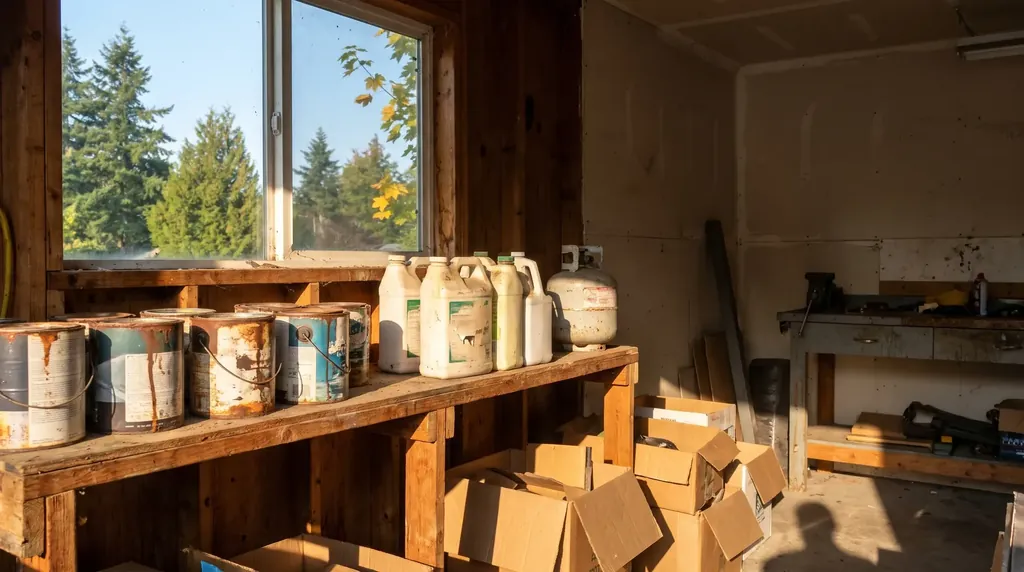
Junk removal crews will not take hazardous waste: paint, solvents, pesticides and other household chemicals, gasoline and other fuels, propane tanks, asbestos, and medical or biohazard waste. These are not ordinary trash. They can leak, catch fire or make people sick in a truck or at the transfer station, and they have to go through a separate hazardous waste system. Almost everything else in a house, garage or yard can go on the truck.
Here is the full list, the reasons behind it, and where each of these things goes instead.
What does junk removal do?
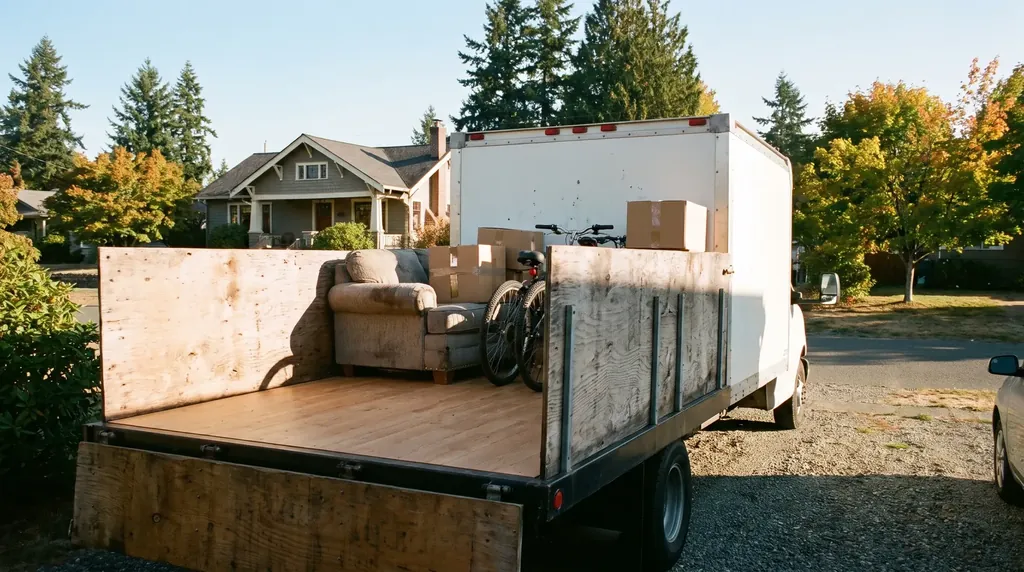
A junk removal crew comes to your house, lifts and carries out the things you no longer want, loads them into a truck, and takes them away. Usable items go to donation or resale where they can, metal and other recyclables go to recycling, and the rest goes to the transfer station. You point, the crew does the lifting.
That covers furniture, mattresses, appliances, hot tubs, boxes, old electronics, yard debris, and the drywall and lumber left over from a remodel. Our junk removal service covers the everyday version of all of it.
What items will junk removal services not take?
Paint, stains and solvents
Liquid oil based paint, stains, varnish, thinner and other solvents are flammable and give off fumes. Many garages have a shelf of half used cans. Those cans stay behind and go to the household hazardous waste drop off.
Pesticides, herbicides and pool chemicals
Garden chemicals and pool chemicals can react with each other if containers break or leak together in a load. They need to travel separately, in their original containers.
Gasoline, oil and other fuels
Fuel in a can, a lawnmower or a pressure washer is a fire risk in a closed truck. Empty fuel from small engines before they go, or keep them aside for the hazardous waste drop off.
Propane tanks and pressurized cylinders
Barbecue tanks, camp stove canisters and other pressurized cylinders can rupture in a truck or under a compactor. They are handled separately, often through a propane exchange or a dedicated drop off.
Asbestos
Older homes in Bellingham and across the county can have asbestos in some flooring, pipe insulation, ceiling texture or siding. Material that may contain asbestos has to be tested, and if it does, removed by a qualified abatement contractor. A junk removal crew will not take it, and you should not break it up yourself.
Medical waste and biohazards
Needles, sharps and anything contaminated with blood or bodily fluids need specialist handling. The same goes for a cleanup after an unattended death. These are jobs for a biohazard cleaning company, not a hauler.
Where hazardous waste goes in Whatcom County
Whatcom County runs a household hazardous waste program for residents. It takes the kinds of things on the list above, usually in their original containers. Check the county’s solid waste information for the current drop off location, opening hours and the items it accepts before you load up the car.
A few tips for the trip:
- Keep products in their original, labelled containers.
- Never mix leftover chemicals together.
- Pack containers upright in a box so they cannot tip.
- Ask about latex paint. In many places it can be dried out and handled differently from oil based paint, but check the current local rules before assuming it.
Items we take that need special handling
Some things are not hazardous waste but still cannot just be dumped. We take them, and they go to the right place.
- Refrigerators, freezers and air conditioners. The refrigerant has to be recovered before the metal is recycled. See appliance removal.
- Electronics. TVs, computers and monitors go to electronics recycling rather than the landfill.
- Mattresses. Mattresses are bulky, hard on landfill equipment and often recyclable. See furniture and mattress options.
- Tires. Tires are taken by tire recyclers rather than mixed into a regular load.