Sofas, sectionals and recliners
Including sleeper sofas, power recliners and sectionals in as many pieces as they came in. Upholstered pieces that got damp in storage are a common call.
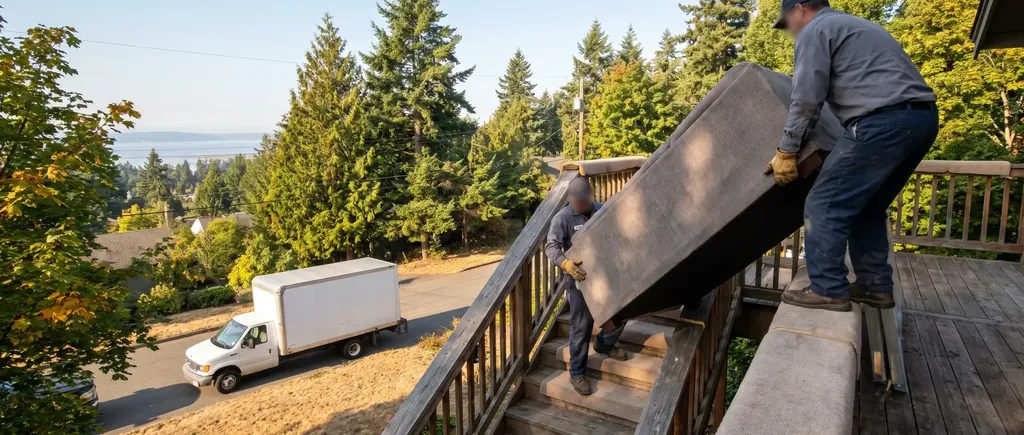
Any room, any stairs
The couch that came in through the window. The dresser that weighs as much as a car. The hide-a-bed in the basement that nobody has opened since the nineties. We get it out of the room, down the stairs and onto the truck without marking your walls, and anything still in good shape goes to donation.
Furniture is where moving junk gets hard. It is big, heavy, oddly shaped, and it has to come out the same narrow way it went in. A lot of Bellingham houses make that harder than usual. The older homes in Sehome, Columbia and the Lettered Streets have tight staircases with a turn at the landing. Hillside lots on South Hill and around Lake Whatcom put a long flight of outdoor steps between the front door and the street. Daylight basements have doors that were never meant for a sectional.
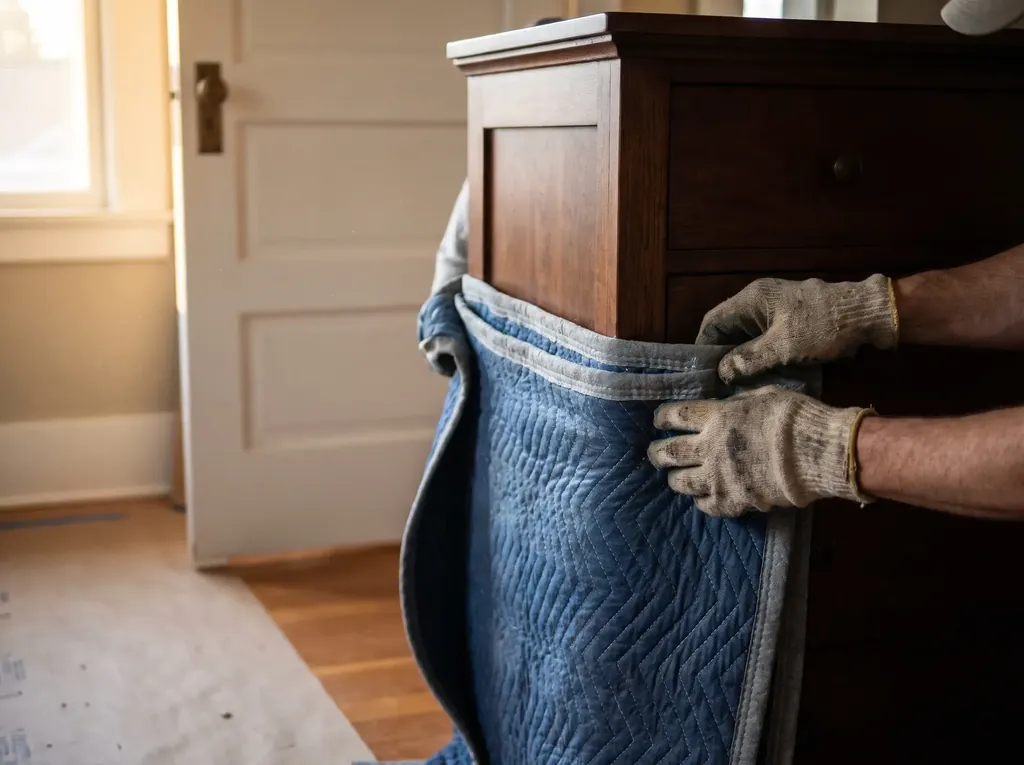
We plan the route before we lift anything. Blankets go on banisters and door frames, runners go on the floors, and two people handle every piece. If something truly will not come out whole, like a sleeper sofa built in place or a bed frame bolted together decades ago, we take it apart rather than force it.
Then it gets sorted. A solid wood dresser, a clean bookcase or a sound dining set can be used by someone else, so it goes to donation instead of the transfer station. Pieces that are broken, stained or soaked go for disposal, and metal frames go for recycling. That matters around here, where a wet winter in a garage or outbuilding ruins more upholstered furniture than wear ever does.
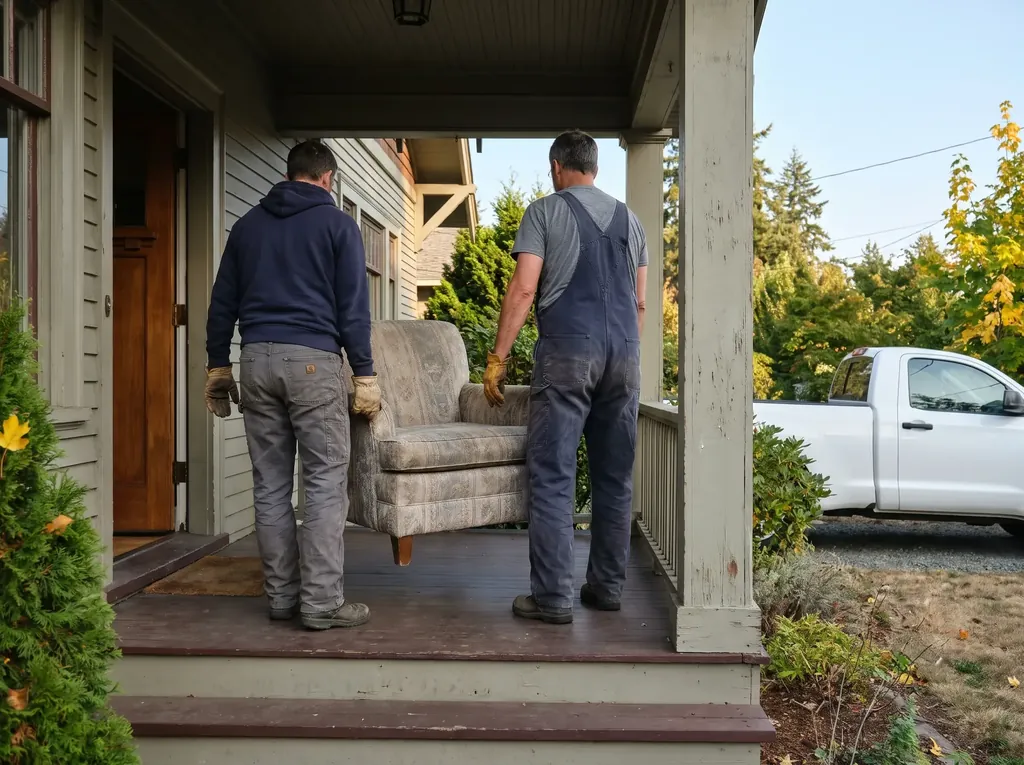
Including sleeper sofas, power recliners and sectionals in as many pieces as they came in. Upholstered pieces that got damp in storage are a common call.
Bed frames, headboards, dressers, wardrobes, mattresses and box springs. Mattresses go for recycling where that is available.
Dining sets, desks, bookcases, entertainment centers, patio furniture, cribs and the odd piece no one can name.
Based on how many pieces there are and how much of the truck they fill, from photos or a quick look.
Blankets, runners and a planned route out, with two people on every piece.
Bed frames, sectionals and anything that will not clear a turn taken apart on site.
Pieces in usable condition set aside for donation before anything goes for disposal.
One of each piece and one of the way out: the stairs, the door, the hallway.
We tell you what it costs and whether anything will need taking apart.
Pick an arrival window. We call when the crew is on the way.
Blankets and runners go down before the first piece moves.
Each piece comes out with two people on it, and the load is sorted for donation, recycling and disposal.
The room is swept where the furniture sat, and you look it over before we leave.
Tight basement stairs, a turn at the landing, forty outdoor steps to the street. That is a normal day for us, and we plan for it rather than finding out halfway down.
We move slower on the hard turns because a gouged wall or a cracked banister costs you more than the furniture is worth.
A sound dresser or a clean table is worth more to someone else than to a landfill. We set those aside for donation every time.
Start by pulling out anything worth selling or giving to family. Then decide what is in good enough shape to donate, since many charities will not take stained, broken or damp upholstery. Everything left is a hauling job. If you are clearing a whole house of furniture, a crew can take it all in one visit, set aside the donatable pieces and dispose of the rest. See our estate cleanouts service for whole house jobs.
In most places you can take a couch to a transfer station or disposal site yourself, usually for a fee based on weight or size. You need a truck or trailer big enough to carry it and someone to help lift it.
Most of the cost is labor and space. Furniture is heavy and bulky, it takes two people to move safely, and a single sectional can fill a big part of a truck. Stairs, long carries and disassembly add time. Disposal fees are charged on top for anything that cannot be donated or recycled. We price on what you actually have, so a single piece costs less than a room full.
If it is in good shape and you can move it, selling it or giving it away costs nothing. Some charities pick up furniture in good condition. For broken, worn or damp pieces, or anything you cannot lift yourself, paying a hauler or making your own transfer station run are the realistic options. Our guide to getting rid of old furniture in Bellingham walks through each option.
Some furniture and mattress retailers will haul away an old piece when they deliver a new one, often for an added fee and usually only a like for like swap. They will not normally clear other furniture or anything that is not being replaced. Ask the store when you order.
Mattresses in good, clean condition can sometimes be donated, though many charities will not accept them. Worn mattresses are best recycled, since the steel, foam and fabric can be recovered. We haul mattresses and box springs and send them for recycling where that is available.
We haul furniture from homes and rentals in Bellingham, Ferndale, Lynden and Blaine, and in Everson, Sudden Valley, Birch Bay, Sumas, Deming and Custer.

Tell us which pieces need to go and how they come out of the house. A photo of the stairs or doorway helps.