Demolition and tear-out debris
Drywall, plaster and lath, lumber, framing, trim, paneling, tile, backer board and siding from residential remodels and repairs.
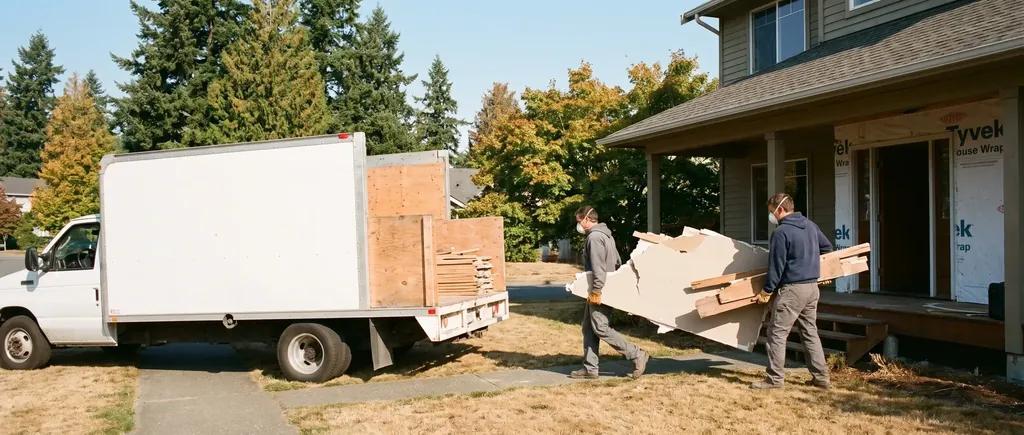
Remodel mess, gone
The old kitchen is out, the bathroom is down to the studs, and the garage is stacked with drywall, lumber and cabinets. We carry it out, load it and haul it away, with no dumpster sitting in your driveway for two weeks and no trips to the dump in the family car.
A remodel makes far more debris than anyone expects. One small bathroom can fill a pickup with tile, backer board, an old vanity, a toilet and a tub. A kitchen adds cabinets, countertops, flooring and appliances. In Bellingham's older craftsman houses there is often more behind the walls too: plaster and lath, old wiring and decades of patched repairs.
A dumpster is one answer, but it takes up the driveway, needs a flat spot the truck can reach, and on a steep Bellingham street or a tight lot it may not fit at all. You also still have to carry everything to it. We work the other way around. You or your contractor stack the debris in the garage, the driveway or the yard, or leave it where it lies, and we carry it to the truck and haul it away in one visit, or come back at each stage of the project.
We take the common materials from residential remodels and repairs: drywall, lumber, flooring, carpet, cabinets, countertops, doors, windows, fixtures and old appliances. Clean lumber, metal and fixtures in good shape are kept out of the landfill where we can. Usable cabinets, doors and fixtures can go to reuse when there is a taker.
There are a few materials we cannot take. Asbestos, lead paint waste, wet paint, solvents and adhesives are hazardous waste and need specialist handling.
In older houses, some flooring, textured ceilings, pipe and duct wrap, and siding can contain asbestos, and old paint can contain lead. We do not haul material that may contain asbestos until testing shows it is clear.
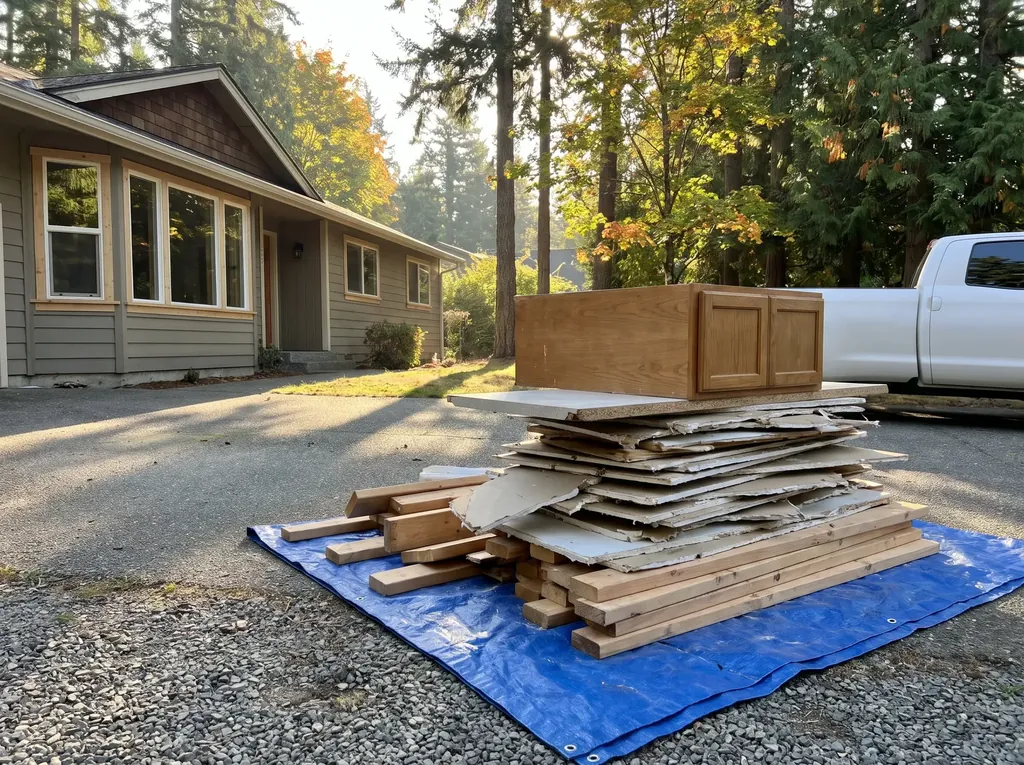
Drywall, plaster and lath, lumber, framing, trim, paneling, tile, backer board and siding from residential remodels and repairs.
Kitchen and bathroom cabinets, countertops, sinks, toilets, tubs, vanities, doors, windows, carpet and pad, laminate and old hardwood.
End of job cleanups for remodelers, handymen and property managers who would rather not tie up a crew on dump runs.
We look at the materials before we quote, so anything we cannot take is flagged before the truck arrives.
Heavy sheets of drywall, broken tile, old cabinets and long lumber are carried out and loaded by the crew.
Metal is separated for recycling, and cabinets, doors and fixtures in usable shape go to reuse where we can find a taker.
When the debris is gone, the floor, garage or driveway is swept so the next trade can start clean.
Pictures of the pile and a note on the materials in it are usually enough for a first estimate.
We tell you what we can take, how much of the truck it will fill and what it will cost before you book.
One pickup at the end, or a visit after demolition and another after the finish work. We fit your project schedule.
The crew carries everything out to the truck, protecting floors and doorways that are staying.
Metal, reusable items and disposal are kept apart on the truck.
The work area is swept and the driveway left clear.
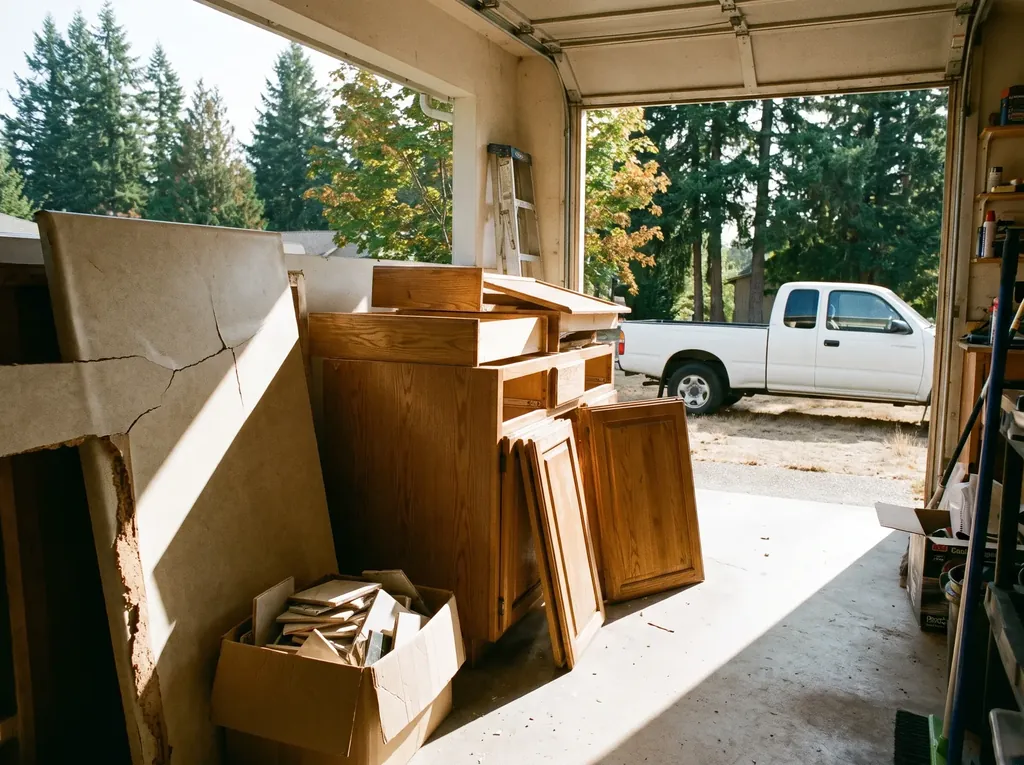
Steep driveways, narrow streets and small lots make dumpsters awkward in a lot of Bellingham neighbourhoods. We bring the truck, load it and leave.
Debris can be cleared at each stage, so it never piles up in the garage or the yard while the work goes on.
If something in the pile looks like asbestos or lead paint waste, we will tell you before we touch it, not after.
Construction debris is the waste from building, remodeling, repairing or tearing down a structure. In a home remodel that typically means drywall, lumber, plaster, tile, concrete pieces, roofing, siding, flooring, cabinets, fixtures, doors and windows. It is usually handled separately from household garbage because of its weight and volume.
Old drywall and plaster, framing lumber and trim, broken tile and backer board, carpet and pad, laminate and hardwood flooring, kitchen cabinets and countertops, bathroom fixtures, doors, windows, siding and fencing are all common examples from residential jobs.
For a small amount, bag it and take it to a disposal site that accepts construction debris, usually for a fee by weight. For a remodel, the usual choices are renting a dumpster or having a crew haul it. Keep hazardous materials such as asbestos, lead paint waste, solvents and wet paint separate, because they cannot go with regular debris.
You need a vehicle that can take the weight, such as a truck or a trailer, tarps and straps to secure the load, and a disposal site that accepts it. Drywall and tile are heavier than they look, so make several smaller trips rather than overloading. Or have us carry it out and haul it in one visit.
For a long remodel with steady debris over weeks, a dumpster can work out cheaper. For a single tear-out, a cleanup at the end of a job, or a site where a dumpster will not fit, a junk removal crew is often similar in cost and saves the time spent carrying and loading.
Most junk removal companies have a minimum charge for a small load, to cover the truck, the crew and the trip.
Ask us and we will tell you our minimum before you book.
We clear remodel and construction debris across Whatcom County: Bellingham, Ferndale, Lynden and Blaine, plus Everson, Sudden Valley, Birch Bay, Sumas, Deming and Custer. That includes older craftsman houses on steep Bellingham streets, new subdivisions in Ferndale and Lynden, and renovations of second homes around Birch Bay.

Tell us what the project is and what is in the pile. Photos of the debris help us give you an accurate price and flag anything we cannot take.