Refrigerators and freezers
Full size fridges, side by sides, mini fridges, uprights and chest freezers, including the ones that have been sitting unplugged in the garage for a year.
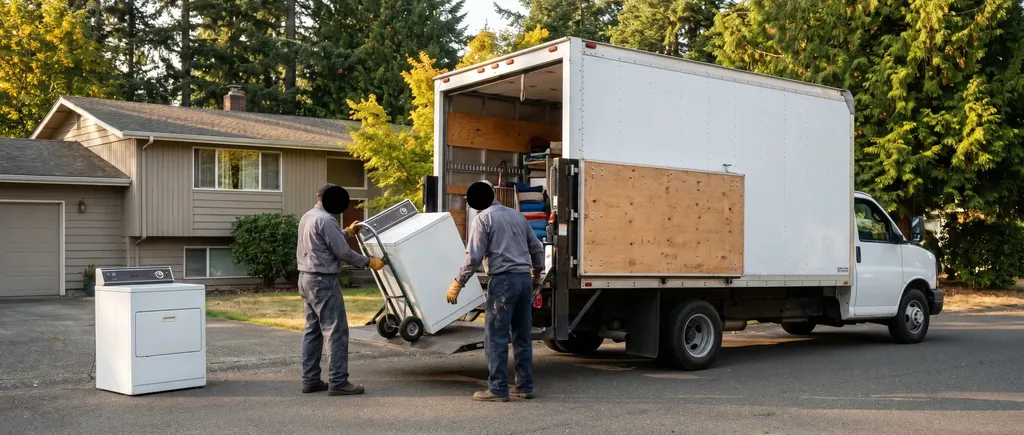
Hauled out, sent for recycling
The fridge that died in the garage. The washer and dryer replaced last month and still sitting in the laundry room. The chest freezer in the basement nobody wants to carry up those stairs. We wheel it out, load it and send it for recycling, so you never have to work out where an old appliance is allowed to go.
Appliances are the heaviest ordinary things in a house and among the most awkward. A full size refrigerator does not bend, a chest freezer has no good handholds, and an old top loader is mostly a steel drum full of weight in the wrong place. Getting one up from a daylight basement or down the steep driveway of a hillside lot is a two person job with the right hand truck, not something to try alone.
They are also not something you can leave at the curb with the garbage. Most of an appliance is metal worth recovering, and refrigerators, freezers, dehumidifiers and air conditioners contain refrigerant that has to be dealt with properly before the unit is scrapped. That is the part people do not want to research, and it is the part we handle.
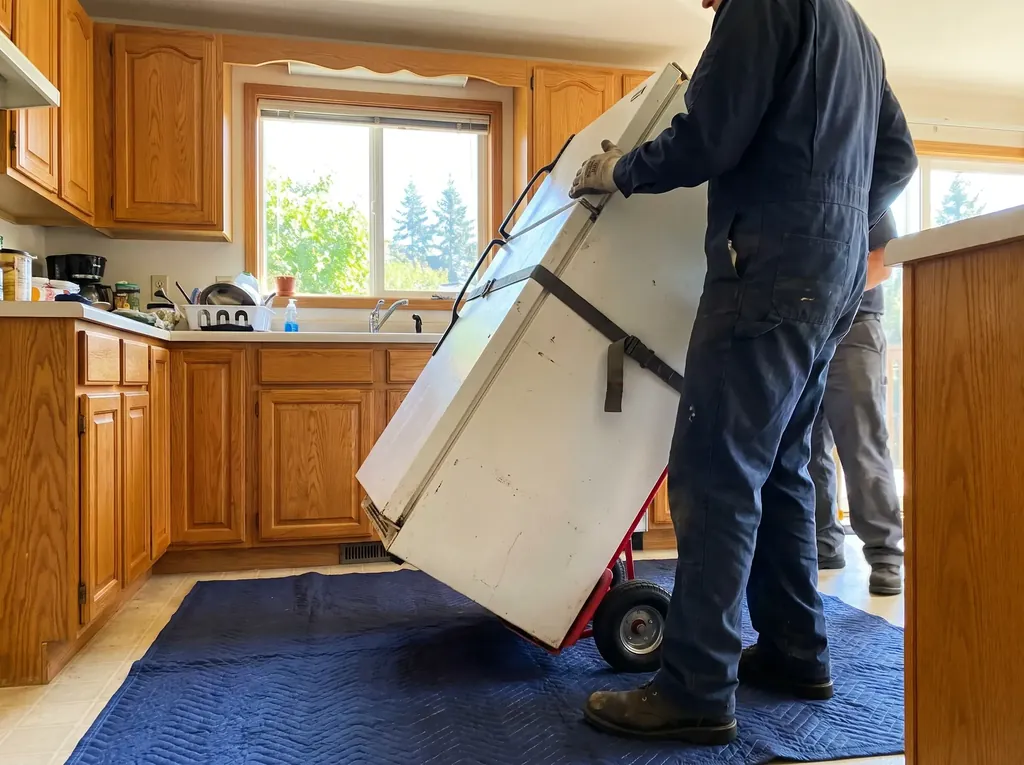
We bring an appliance dolly, straps and floor protection. Washers get their hoses drained before they move. Doors on fridges and freezers are secured. Then the unit goes for recycling, and if it still works and is clean, we check whether it can go to reuse instead.
Full size fridges, side by sides, mini fridges, uprights and chest freezers, including the ones that have been sitting unplugged in the garage for a year.
Top loaders, front loaders, stacked units and old dishwashers left behind after a kitchen update.
Electric ranges, wall ovens, microwaves, tank water heaters, dehumidifiers, window air conditioners and trash compactors.
From a photo of the appliance and where it sits, confirmed on site.
An appliance hand truck, straps and blankets, with two people on every unit.
We unplug units and drain and cap washer hoses. Gas ranges, gas dryers and hardwired or plumbed water heaters need to be disconnected before we arrive.
Metal and working units sorted for recycling or reuse instead of disposal.
One of the appliance and one of the way out, especially any stairs.
We tell you the cost and anything that has to be disconnected first.
Pick an arrival window. We call when the crew is on the way.
Hoses drained, doors secured, floors and door frames protected.
Two people and a hand truck, out of the room and onto the truck.
The unit goes for recycling or reuse, and the spot where it sat is swept.
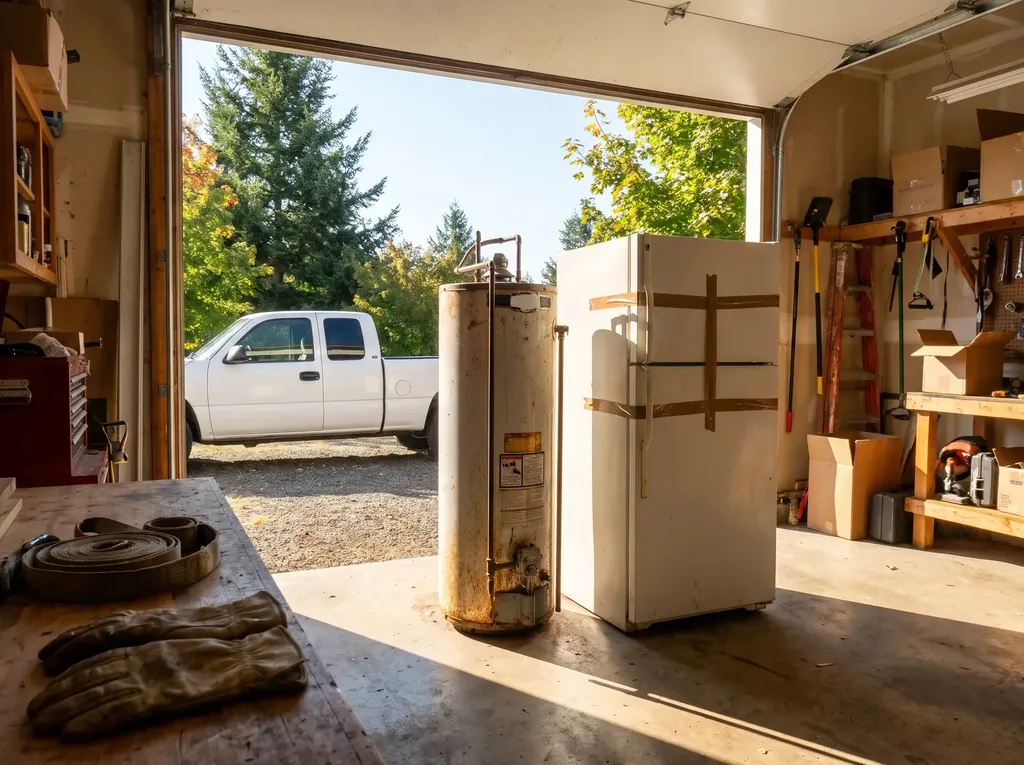
A dragged fridge can tear vinyl and gouge hardwood. We lift and roll on protection the whole way.
Where an old fridge or freezer is allowed to go is not obvious. We handle it and tell you where it went.
Since the truck is already there, the broken shelving, old boxes and anything else in the garage can go on the same trip.
If it still works, selling or giving it away keeps it in use. If it does not, it needs to go somewhere that recovers the refrigerant and recycles the metal, not to the curb with the trash. Some utilities and retailers run programs that pick up old fridges. A hauler can take it out of the house and send it for recycling for you.
A working washer can often be given away or sold through local listings, and someone will usually come and pick it up. Some retailers take the old one away when they deliver a new one. A broken washer has scrap metal value, so some scrap collectors will take it, but you normally have to get it to the curb yourself.
Toasters, microwaves, coffee makers and blenders that no longer work are mostly metal and electronics, so they are better recycled than thrown out. We take small appliances along with a larger load.
It depends on the appliance, how many there are, and how hard they are to get out. A single fridge from a ground floor garage costs less than a chest freezer from a basement with steep stairs. Units that need special handling for recycling can cost more than ones that are just metal.
We will give you an exact price from a photo.
Working appliances that are fairly new and clean can sell secondhand. Old or broken ones are usually worth little more than their scrap metal, and once you count the work of moving them, most people treat them as a disposal job rather than a sale.
Sell or give away the ones that work, and recycle the ones that do not. Ranges, dishwashers and fridges are mostly steel. If you are replacing a kitchen, the old appliances can go out with the rest of the remodel debris. See our construction debris removal service.
We haul old appliances from homes, rentals and garages in Bellingham, Ferndale, Lynden and Blaine, and in Everson, Sudden Valley, Birch Bay, Sumas, Deming and Custer.

Tell us what the appliance is, where it sits and how it comes out. A photo of the unit and the stairs helps.