An estate cleanout goes best in this order: confirm who has the authority to make decisions, secure important papers and valuables, photograph the house as it is, decide what the family keeps, then sell, donate and haul the rest, room by room. The hardest part is rarely the lifting. It is the decisions, and they go better when nobody is rushing.
Here is a checklist that works whether you have a week or three months, and whether you live down the road or several states away.
Before you move anything
- Confirm who can decide. Find out who is the executor or personal representative, and confirm with them, or with the estate’s attorney, what can be removed and when. Some things should not leave the house until that is settled.
- Secure the house. Change or collect the keys, lock up, and make sure someone is checking on it.
- Keep the utilities on. You will want lights, heat and water while you work. In a Whatcom County winter, an empty house without heat risks frozen pipes.
- Forward the mail. Bills, statements and notices will keep coming, and you need to see them.
- Tell the family the plan. Agree on dates and on how decisions about shared keepsakes will be made, before anyone starts boxing things up.
Find the important papers and valuables first
Go through the house for these before anything is sorted or thrown away:
- Wills, trust documents and any letter of instruction
- Deeds, vehicle titles and insurance policies
- Bank, retirement and investment statements
- Tax returns and recent bills
- Birth, marriage and military records
- Keys, safe combinations and passwords written down
- Cash, jewellery, coins, firearms and anything else valuable
Put everything you find in one locked box or folder and give it to the executor.
Photograph every room
Before anything moves, walk through and photograph every room, every closet and every drawer that matters. It helps family members who cannot be there choose keepsakes, it gives the executor a record, and it is good to have once the house looks different.
Decide what the family keeps
Give each family member time to name what they want, from the photographs or in person. Mark kept items clearly with tape or tags, or move them into one room so they cannot be packed by mistake. Sentimental items that nobody has room for can be photographed before they go. Expect this step to take longer than you planned, and let it.
Look before anything leaves
People tuck valuable and personal things in unexpected places. Before a single bag goes out:
- Check coat pockets, handbags and shoe boxes
- Leaf through books, Bibles and photo albums for letters, cash or photos
- Look inside freezers, cookie tins, and under drawers and mattresses
- Open every box in the garage, the attic, the basement and any shed or outbuilding
- Check the backs of closets and the space above the garage door
In Lynden and the rural north county, barns and shops can hold decades of tools, equipment and family papers. Give them the same careful look as the house.
Sort the rest into four groups
Work one room at a time and sort into four groups:
- Keep: already chosen by the family
- Sell: furniture, tools, collectibles and anything worth an estate sale or a listing
- Donate: usable household goods, clothing and furniture in good condition
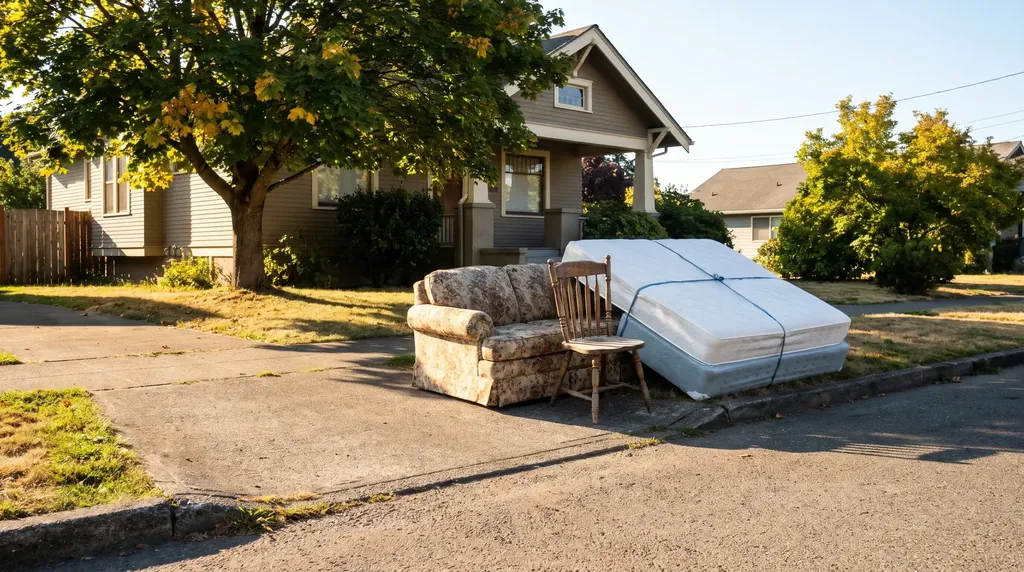
- Haul: everything that is broken, worn out, damp, or that nobody wants
Do the selling first, while the house is full, and the donating and hauling after. Our guide to old furniture and mattresses helps with the donate and haul groups.
Clear the house
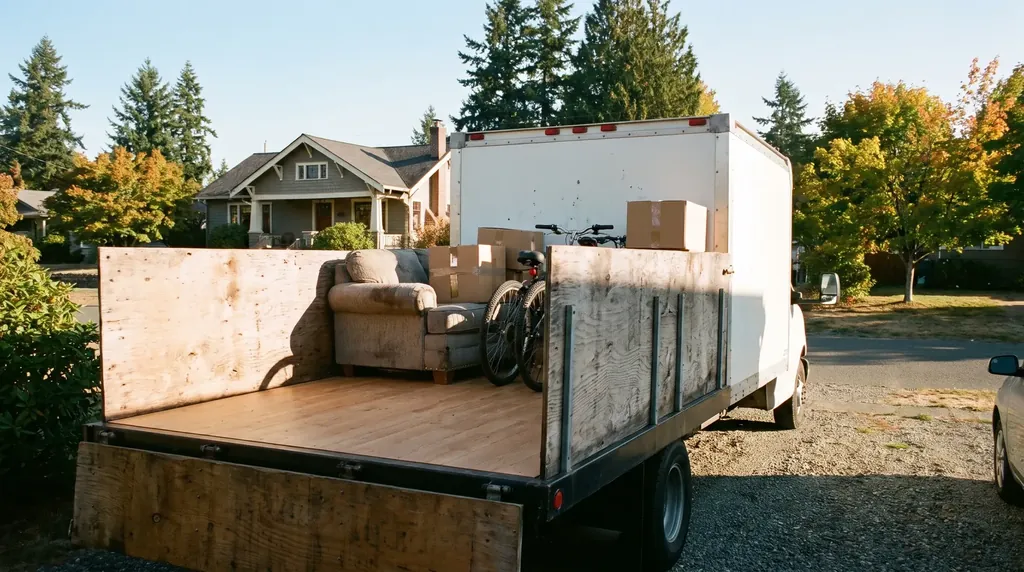
Once the keepers and sale items are gone, the rest can go out in one or two big visits. A cleanout crew carries everything out, takes usable items to donation, recycles what can be recycled, and leaves the rooms broom clean and ready for cleaners, an agent or a sale. Hazardous items such as old paint and garden chemicals have to go to the county drop off. See what junk removal will not take.